Home / Liquid cooling
Cooling
Data centre liquid cooling for dense GPU systems
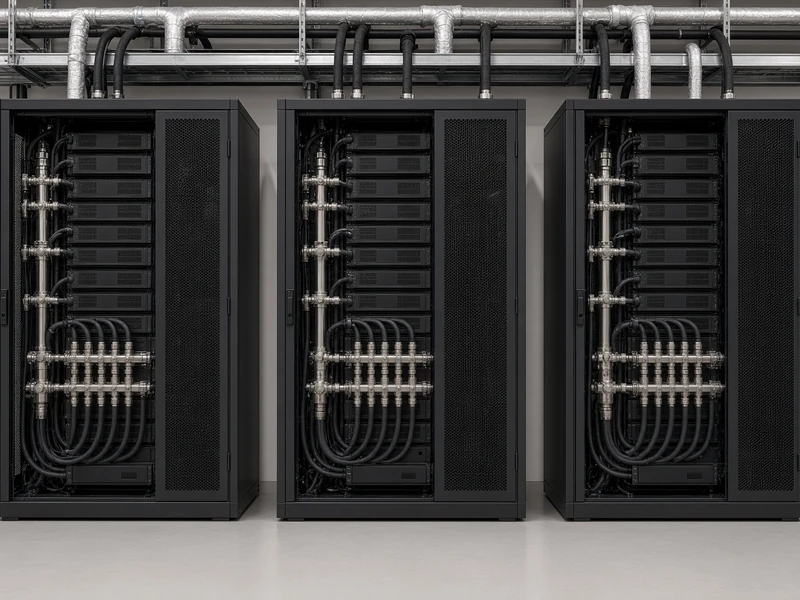
Dense GPU racks give off more heat than air alone can comfortably remove. Alongside GPU systems we supply cooling equipment for GPU deployments: direct-to-chip kits, coolant distribution units and rear door heat exchangers, so the systems and the cooling arrive planned as one.
01
What it is
Heat has to be removed somewhere, and each approach does it at a different point. Direct-to-chip liquid cooling takes heat from the hottest parts through cold plates. A coolant distribution unit keeps the facility loop and the server loop apart. A rear door heat exchanger takes the heat out of the air as it leaves the rack.
Air cooled and liquid cooled are both valid; the site usually decides. The right answer depends on the configuration, and we confirm it in the quote. Stock and availability on application.
02
Who it is for
- Dense GPU racks, new builds, rooms that already have water, and rack scale systems.
- Existing rooms adding denser racks, with standard racks and air cooled servers at higher density.
- Rooms without facility water, where liquid-to-air units reject heat into the room.
- Organisations that want the cooling quoted together with the GPU systems it serves.
From chip to room
Heat has to be removed somewhere. Each approach does it at a different point.
In words: heat leaves the chip through cold plates (direct-to-chip); at the rack it passes through manifolds, an in-rack CDU or a rear door heat exchanger; in the row an in-row or liquid-to-air CDU hands it on; the facility side (facility water, dry coolers, chillers) takes it from there.
Cooling approaches
- 01
Direct-to-chip liquid cooling
Cold plates on the hottest parts, with coolant carried through manifolds in the rack.
- Dense GPU servers
- New builds and rooms with water
- Rack scale systems
- 02
Coolant distribution units
Keep the facility loop and the server loop apart, and manage flow, temperature and filtration.
- Any liquid cooled system
- In-rack, in-row or liquid-to-air
- Rooms with or without water
- 03
Rear door heat exchangers
A coil replaces the rack's rear door and takes the heat out of the air as it leaves.
- Existing rooms
- Standard racks
- Air cooled servers at higher density
Compare the approaches
| Approach | Where heat is removed | Needs facility water | Fits an existing room | Typical use |
|---|---|---|---|---|
| Direct-to-chip | At the chip, through cold plates | Usually, through a CDU. Liquid-to-air units can avoid it | Sometimes; depends on the site | Dense GPU servers and rack scale systems |
| CDU | Between the server loop and the facility loop | Depends on the unit type | Usually, in-row and liquid-to-air types in particular | Any liquid cooled system |
| Rear door heat exchanger | At the rack, as air leaves | Usually, or a separate chilled loop | Usually; fits standard racks | Existing rooms adding denser racks |
Words such as usually and sometimes are deliberate. The answer depends on the site, and we confirm it in the quote.
06
What we need from you
- Room or site type: existing room, new build or colocation space.
- Rack count and layout.
- Power available per rack, if known.
- Whether facility water is available.
- The GPU systems planned.
- Timeline and delivery region.
We source cooling equipment from established manufacturers.
How we work
Five steps, whether the request is for GPU systems, cooling, or both. Each enquiry carries a reference from receipt, and nothing is agreed until a written quote is accepted.
- 01
Scoping
We confirm workload, configuration, quantity and site constraints before anything else.
- 02
Configuration and validation
We check the bill of materials, power, cooling and interconnect fit before quoting, and check the system against the cooling and power you have or plan.
- 03
Sourcing
We source the configuration and confirm details in the written quote.
- 04
Compliance and checks
Sanctions, export control, end use and know your customer checks before any quote is final.
- 05
Logistics and delivery
We arrange delivery to your site and confirm the terms in writing.
08
Related questions
C02Do GPU servers need liquid cooling?
Not always. Many configurations are available air cooled. Denser nodes and rack scale systems are increasingly designed for liquid, and some are only offered that way. It depends on the configuration; we confirm this in the quote.
C03Can liquid cooling be added to an existing room?
Often, yes. Rear door heat exchangers fit standard racks, and liquid-to-air CDUs reject heat into the room without facility water. Direct-to-chip with facility water usually needs pipework and a plan for the room.
C01What is direct-to-chip cooling?
Metal cold plates sit on the GPUs and CPUs. Coolant flows through them, picks up the heat and carries it out of the server through manifolds in the rack to a coolant distribution unit.
C04What does a CDU do?
A coolant distribution unit keeps the loop that runs through the servers separate from the facility loop, and controls flow, temperature and filtration. Units come as in-rack, in-row or liquid-to-air.
C05What is a rear door heat exchanger?
A coil that replaces the rack's rear door. Server fans push hot air over it, coolant in the coil takes the heat, and the air leaves at about room temperature. Passive versions rely on server fans; active versions add their own.
Q14Can you quote GPU systems and cooling together?
Yes. That is the point of offering both. Choose "GPU systems and cooling" on the contact form, tell us about the site, and one written quote covers the systems and the cooling equipment. See Cooling.
Q07Do you supply hardware other than GPUs?
Yes. Alongside GPU systems we now supply cooling equipment for GPU deployments: direct-to-chip kits, coolant distribution units and rear door heat exchangers. Servers, storage and networking are planned as later categories, and we will say so on the GPUs page when they are available. See Cooling.
Related pages
Direct-to-chip liquid cooling
Cold plates on the hottest parts, with coolant carried through manifolds in the rack.
Coolant distribution units
Keep the facility loop and the server loop apart, and manage flow, temperature and filtration.
Rear door heat exchangers
A coil replaces the rack's rear door and takes the heat out of the air as it leaves.
GPU servers
GPU servers, rack scale GPU systems and PCIe GPUs.
Request a quote
Ask a question or request a quote for GPU systems, cooling, or both. We reply to enquiries as soon as we can.